
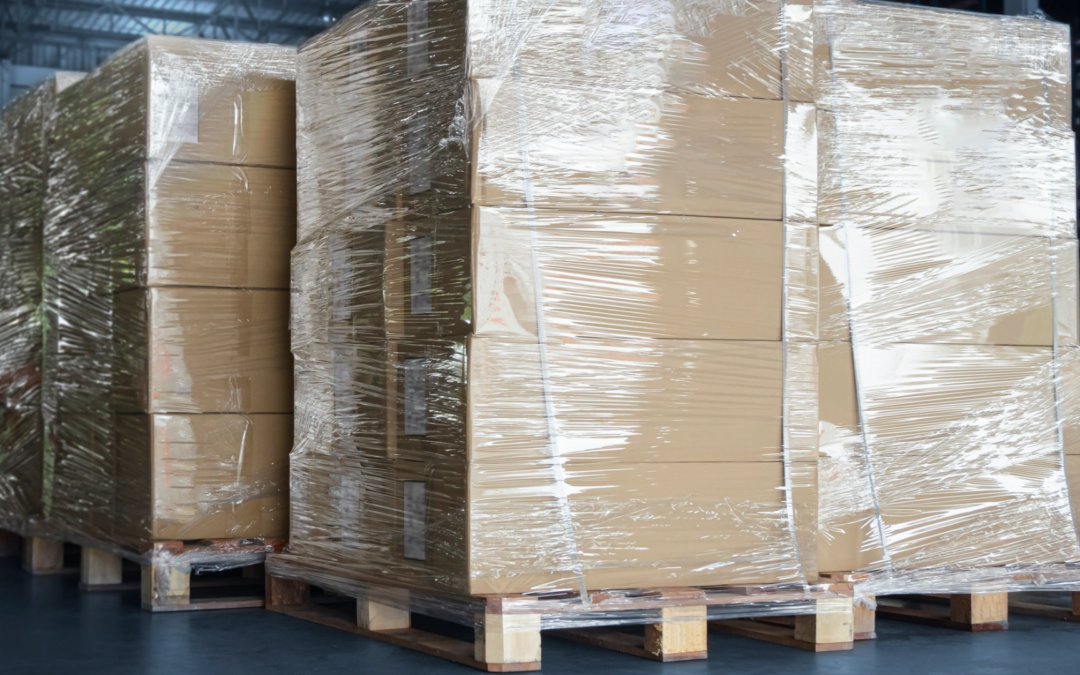
Plastic stretch wrap has been the standard for pallet containment for decades. It’s familiar, effective, and deeply embedded in logistics operations around the world.
But growing concerns around packaging waste, sustainability targets, and regulatory pressure are causing companies to rethink whether traditional stretch film is the only option.
As organizations look for ways to reduce plastic waste across their supply chains, pallet wrapping has emerged as an area with significant opportunity for change.

Armin Niederhuber,
Manager R&D
New Business
Why Companies Are Looking Beyond Stretch Wrap
The challenge isn’t that stretch wrap doesn’t work. The challenge is what happens after it does.
Once a pallet reaches its destination, the film is typically removed and discarded, contributing to plastic waste streams. For companies working toward sustainability goals, reducing single-use plastic packaging has become a growing priority.
At the same time, businesses are facing increased pressure from customers, corporate sustainability initiatives, and evolving packaging regulations to explore more environmentally responsible packaging solutions.
What makes WIN Different?
Historically, paper-based pallet wrapping was often viewed as a compromise. Companies accepted sustainability benefits but expected lower performance.
That’s where newer technologies are changing the conversation.
WIN™ (Wrap It Naturally) is a high-performance, fiber-based pallet wrapping material designed specifically to replace plastic stretch film in form-fit pallet wrapping applications. Unlike conventional paper solutions, WIN is engineered to provide the strength and elongation required for pallet containment while using renewable cellulose fiber instead of plastic film.
Paper vs. Plastic: A Different Approach to Load Containment
Both materials can secure palletized loads, but they do so in different ways.
Traditional stretch wrap relies on elastic recovery to contain the load. WIN utilizes the combination of tensile strength and elongation in a fiber-based structure to create secure pallet containment. Its surface characteristics also eliminate the need for additional gluing during the wrapping process.
Some key differences include:
- Stretch Wrap: Plastic-based, widely used, moisture resistant, typically disposed of after use.
- WIN™: Made from certified cellulose fibers, fully recyclable in paper recycling streams, printable, and compatible with conventional wrapping equipment.
Rather than being a direct replacement for every application, WIN offers companies another option when sustainability is a key decision factor.
Sustainability Without Sacrificing Performance
The most common question surrounding paper-based pallet wrapping is simple: Can it perform?
WIN was developed with that challenge in mind. The material has been tested on conventional turntable, automatic, and hand-wrapping systems and was specifically engineered for pallet containment applications.
In addition to being fully recyclable, WIN is produced from cellulose fiber and has a reported product carbon footprint of -0.27 kg CO₂/kg, compared to approximately 2.2 kg CO₂/kg for plastic film.
For companies seeking to reduce plastic use while maintaining operational performance, that combination is attracting attention across the logistics sector.
The Future of Pallet Wrapping
Stretch wrap will continue to play an important role in many supply chains. But as sustainability becomes a larger factor in packaging decisions, companies are increasingly evaluating whether traditional plastic film is the best long-term fit for their operations.
The question is no longer whether alternatives exist. It’s whether those alternatives can deliver the performance, handling, and reliability required in the real world.
With WIN™, Indafor is helping answer that question with a fiber-based pallet wrapping solution designed to support both load containment and sustainability goals.
Interested in reducing plastic waste without compromising pallet stability? Learn how Indafor WIN can help support your sustainability objectives while delivering reliable form-fit pallet wrapping performance.
Frequently Asked Questions
What is a stretch wrap alternative?
A stretch wrap alternative is a material or technology used to secure palletized goods during transport and storage without relying on conventional plastic stretch film.
Can paper-based pallet wrap replace stretch wrap?
Paper-based pallet wrap may be a suitable alternative for certain pallet containment applications when performance, equipment compatibility, and sustainability objectives align.
Is paper pallet wrap recyclable?
Many fiber-based pallet wrapping materials are designed to be recyclable through paper recycling streams, depending on local recycling capabilities.
Does paper pallet wrap provide enough strength?
Modern fiber-based pallet wrapping solutions are engineered to provide strength and elongation characteristics that support load containment during transportation and storage.
Why are companies looking for alternatives to stretch film?
Many organizations are seeking ways to reduce plastic waste, support sustainability goals, comply with evolving regulations, and improve the environmental profile of their packaging operations.