
When companies think about reducing packaging waste, they often focus on product packaging, shipping materials, or consumer-facing applications. But one of the largest and most overlooked sources of plastic waste in the supply chain is sitting in warehouses and distribution centers around the world: pallet wrap.
Every day, countless pallets are wrapped, shipped, unwrapped, and discarded. While each roll of stretch film may seem insignificant on its own, the cumulative impact across a supply chain can be substantial. As sustainability becomes a core business objective, more organizations are evaluating pallet wrapping as an opportunity to reduce plastic consumption and improve the environmental profile of their operations.

Armin Niederhuber,
Manager R&D
New Business
Why Pallet Wrap Is Getting More Attention
For decades, plastic stretch film has been the standard solution for load containment. It is effective and widely used across industries.
However, the growing focus on plastic reduction is changing how companies evaluate packaging materials. Sustainability commitments, customer expectations, and evolving packaging regulations are pushing businesses to look beyond traditional approaches and assess the full lifecycle impact of the materials they use.
Because pallet wrap is consumed at such a large scale, even incremental changes can have a meaningful impact on waste reduction efforts.
A New Approach to Load Containment
Historically, companies seeking to reduce plastic packaging had limited alternatives for pallet wrapping. Today, fiber-based technologies are creating new possibilities.
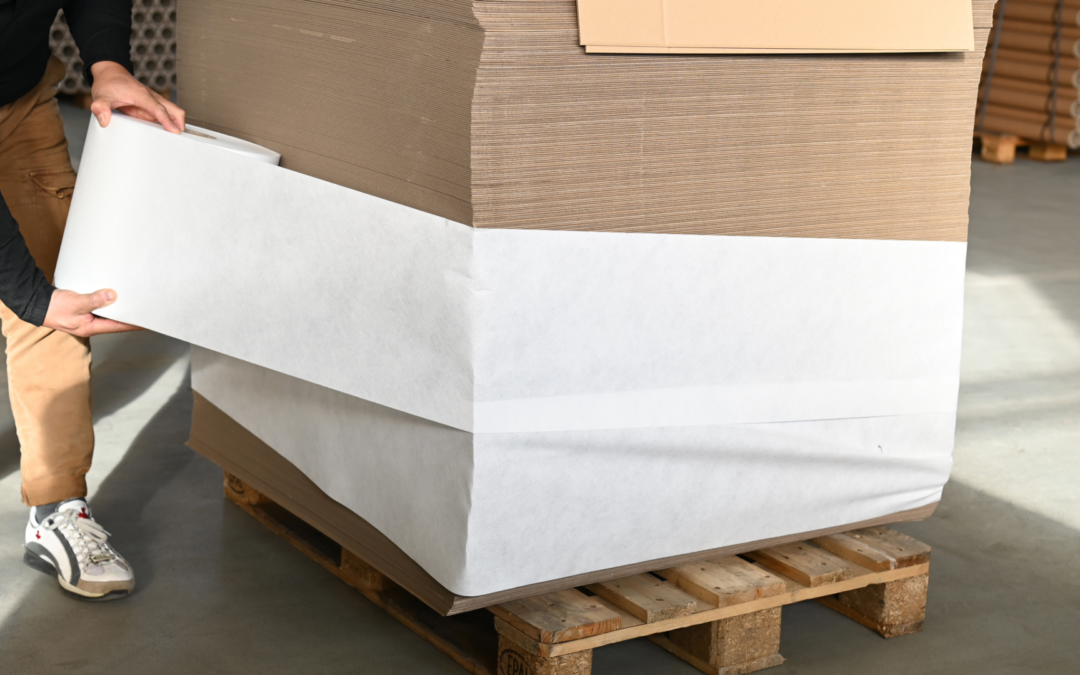
Indafor WIN™ (Wrap It Naturally) was developed specifically as a replacement for plastic stretch film in form-fit pallet wrapping applications. Made from certified cellulose fibers, WIN provides a renewable, fiber-based alternative designed to deliver the load containment performance logistics operations require.
Reducing Waste Beyond the Warehouse
The sustainability benefits of pallet wrap extend beyond what happens during shipping.
After a pallet is unloaded, plastic film typically requires separate collection and recycling processes—or may ultimately become waste. WIN, by contrast, is fully recyclable through paper recycling streams, helping simplify end-of-life handling and support circular packaging objectives.
For organizations managing thousands of pallet movements each year, transitioning from plastic-based to fiber-based pallet wrapping can represent a meaningful step toward reducing waste throughout the supply chain.
Sustainability Without Compromising Performance
Reducing waste only matters if products arrive safely.
That’s why WIN was engineered for real-world logistics environments. The material combines strength and elongation to help create secure pallet containment and has been tested for use on conventional turntable wrappers, automatic systems, and hand-wrapping applications.
In addition to being fiber-based and recyclable, WIN offers a reported product carbon footprint of -0.27 kg CO₂/kg, compared to approximately 2.2 kg CO₂/kg for conventional plastic film.
This gives organizations another way to evaluate packaging decisions beyond cost and operational performance alone.
Small Change, Big Impact
Supply chain sustainability is rarely achieved through a single initiative. Instead, it comes from identifying opportunities throughout the operation where materials, processes, and waste streams can be improved.
Pallet wrapping is one of those opportunities.
As businesses continue searching for ways to reduce plastic packaging and meet sustainability goals, fiber-based pallet wrapping solutions like WIN™ are proving that meaningful change can start with something as simple as the material wrapped around a pallet.
Looking to reduce plastic waste in your distribution and logistics operations? Learn how WIN™ can help support your sustainability goals with a fiber-based alternative to traditional stretch wrap.
Frequently Asked Questions
Why is pallet wrap a source of plastic waste?
Pallet wrap is used in large volumes across warehouses and distribution centers. Once a shipment reaches its destination, the material is typically removed and discarded, creating a significant waste stream.
What is a sustainable alternative to plastic stretch wrap?
Fiber-based pallet wrapping materials are emerging as alternatives to conventional plastic stretch film. These materials are designed to provide load containment while supporting plastic reduction initiatives.
Can pallet wrap be recycled?
Recycling options depend on the material. Plastic stretch film often requires separate collection streams, while some paper-based pallet wraps can be recycled through existing paper recycling systems.
How can companies reduce plastic waste in their supply chains?
Organizations often evaluate product packaging, shipping materials, pallet wrapping, recycling programs, and packaging design to identify opportunities to reduce plastic consumption.
Does sustainable pallet wrap perform as well as stretch film?
Modern fiber-based pallet wrapping solutions are engineered to provide load containment performance suitable for many logistics applications while supporting sustainability objectives.